Hello, welcome to Kuwait
- 645104092@qq.com
- 13924610580



Address: 2nd Floor, No. 57, Shaxin Road, Shabo New Village, Pingshan District, Shenzhen
Email:645104092@qq.com
Fax: 86-0755-89713989
Telephone (Tel): 86-0755-89713979
13924610580, 13590473689, 13670784540
QQ:645104092,514559101
The LED industry's demand for LED packaging substrates continues to increase. The most common ones are metal packaging substrates and flip-chip ceramic substrates. Today we focus on analyzing the differences between ceramic packaging substrates and metal packaging.
Most metal packaging substrates on the market are aluminum-based reflectors, and flip-chip ceramic substrates are mostly aluminum oxide. Let’s take a look at the functional differences between the two:
Metal packaging substrate refers to a printed circuit board based on metal packaging, that is, the original printed circuit board is attached to another metal with better thermal conductivity, which can improve the heat dissipation effect at the circuit board level. However, the temperature cannot exceed 140 degrees Celsius during the operation of the circuit system. This is mainly due to the characteristics of the dielectric layer. In addition, the temperature must not exceed 250 degrees Celsius to 300 degrees Celsius during the manufacturing process. This must be understood before passing through the tin furnace.
The heat dissipation performance of metal packaging substrates is average, but better than FR4. Existing metal packaging substrates can reach 3W\/mK, while FR4 is only 0.3W\/mK
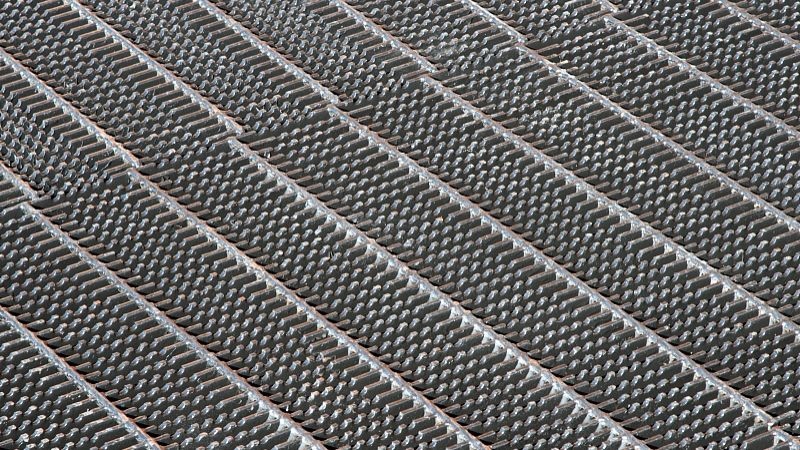
Considering the insulation, voltage resistance, heat dissipation and heat resistance of ceramic substrates, ceramic substrates have become one of the important materials for chip technology. This technology can be divided into thin film technology, low temperature co-firing technology and other methods. The thermal performance of ceramic substrates is 100 times that of ordinary FR4, and the heat dissipation performance of metal packaging substrates is ten times that of metal packaging substrates. The thermal conductivity of alumina ceramic substrates is 30-50W\/mK. If it is an aluminum nitride substrate, it can remove 170 w\/mK
High heat dissipation coefficient thin film ceramic heat dissipation substrate is made by sputtering, electro\/chemical deposition, yellow light lithography process. It has the characteristics of precision metal packaging circuit and stable material system. It is suitable for the development of high power, small size, high brightness LED. The trend is to solve the strict requirements of eutectic\/flip chip packaging process on the resolution and accuracy of ceramic substrate metal packaging circuit. When LED chips use ceramic as When the board is loaded, the heat dissipation bottleneck of the LED module is transferred to the system circuit board, which transfers heat from the LED chip to the heat sink and the atmosphere. As the functions of the LED chip gradually improve, the material gradually changes from FR4 to metal core printed circuit board (MCPCB). However, as the demand for high-power LEDs advances, the heat dissipation coefficient of MCPCB material (24W)\/mk) It cannot be used for higher power products. For this reason, the demand for ceramic circuit boards has gradually become popular. In order to ensure the material stability and light attenuation stability of LED products under high-power operation, the trend of using ceramics as heat dissipation and metal wiring substrates is becoming more and more obvious. At present, the cost of ceramic materials is higher than MCPCB. Therefore, how to use the high heat dissipation coefficient of ceramics to save material usage area and reduce production costs has become one of the important indicators for the development of ceramic LEDs. Currently, the demand for ceramic substrates as packaging substrates is increasing.
commonQuestions andSolution
查看更多 >
Provide services in a way that truly satisfies customers. Provide users with high-quality products and services comprehensively, quickly, and perfectly. Kuwait people regard it as their own responsibility to rewrite "Made in China" as "Created in China" and strive to strive for self-improvement and continuous progress toward the goal of becoming a Fortune 500 company in the world.查看更多 >
Your Name:
E-mail:
Phone:
Content:


